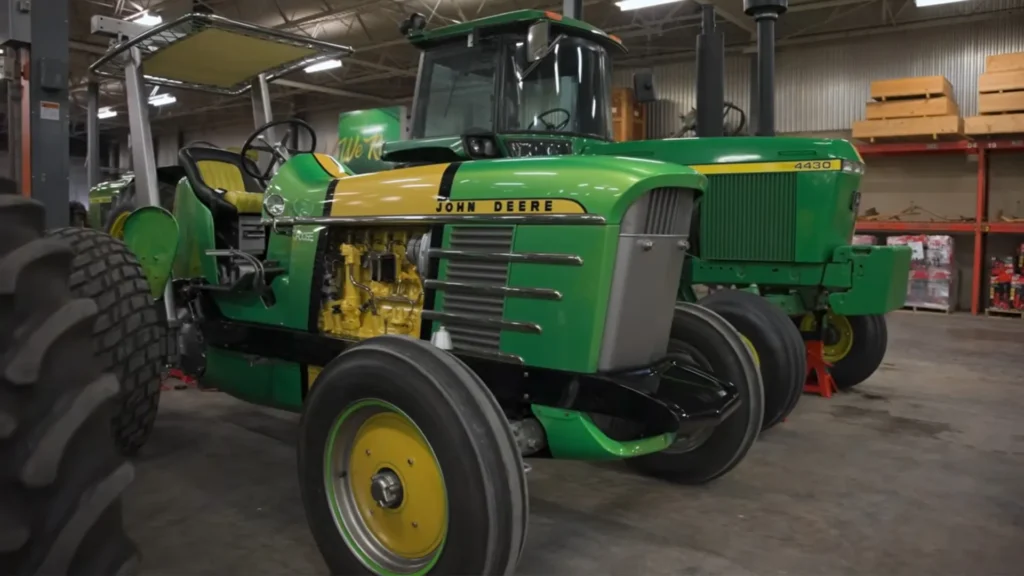
- CHIP FOOSE TRANSFORMED A 1970 JOHN DEERE 4020 DIESEL TRACTOR INTO A SPRINT CAR STYLED CUSTOM BUILD FOR THE BRAND’S DRIVE GREEN TOUR.
- THE FULLY FUNCTIONAL DESIGN FEATURES AN ELONGATED SWOOPING HOOD, CUSTOM SIDE EXHAUST PIPES, AND A METALLIC GREEN PAINT JOB DUBBED KERMIT DEFROG.
- AFTER TOURING DEALERSHIPS AS A GRAND PRIZE, THE TRACTOR IS NOW RETIRED AND PRESERVED INSIDE THE JOHN DEERE ARCHIVES FACILITY IN ILLINOIS.
Back around 2010, shortly after his Overhaulin’ show wrapped its final season, legendary hot rod designer Chip Foose took on a project that split the agricultural world right down the middle. John Deere handed him a stock 1970 4020 Row-Crop diesel tractor and essentially said: make it yours. What came out of that workshop looked less like a piece of farm equipment and more like something ready to lap a dirt oval.
The Big Buck Sales Event and the Drive Green Tractor Experience Tour were the marketing campaigns that gave Foose the canvas. Production on the 4020 ran from 1968 through 1972, and John Deere built plenty of them, so nobody was sacrificing a one-of-one piece of history. Foose picked the model specifically because its sweeping silhouette already reminded him of a vintage circle-track race car. That natural resemblance gave him something to push further rather than build from scratch.
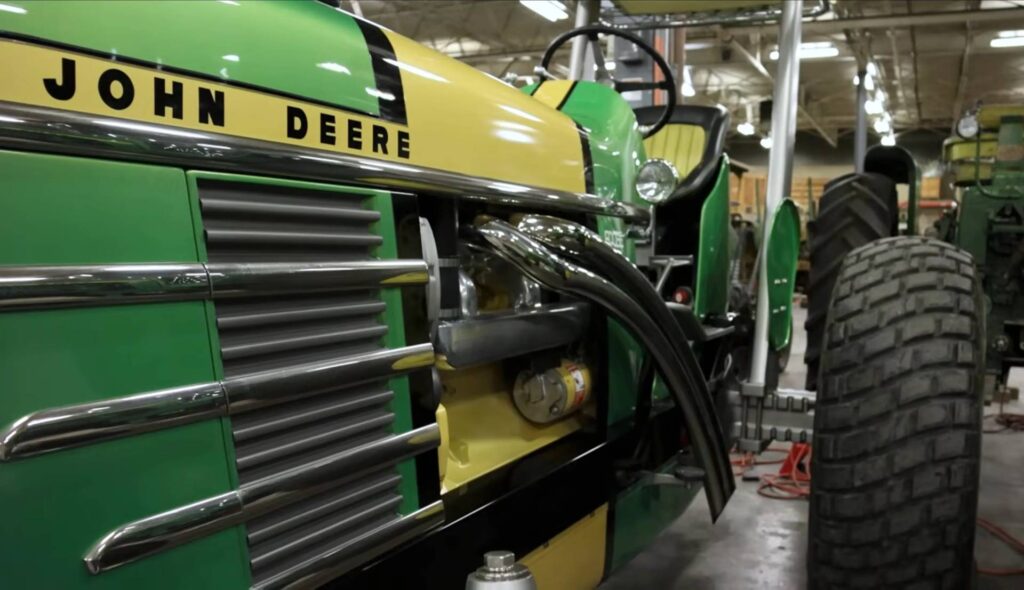
The Sprint Car Influence
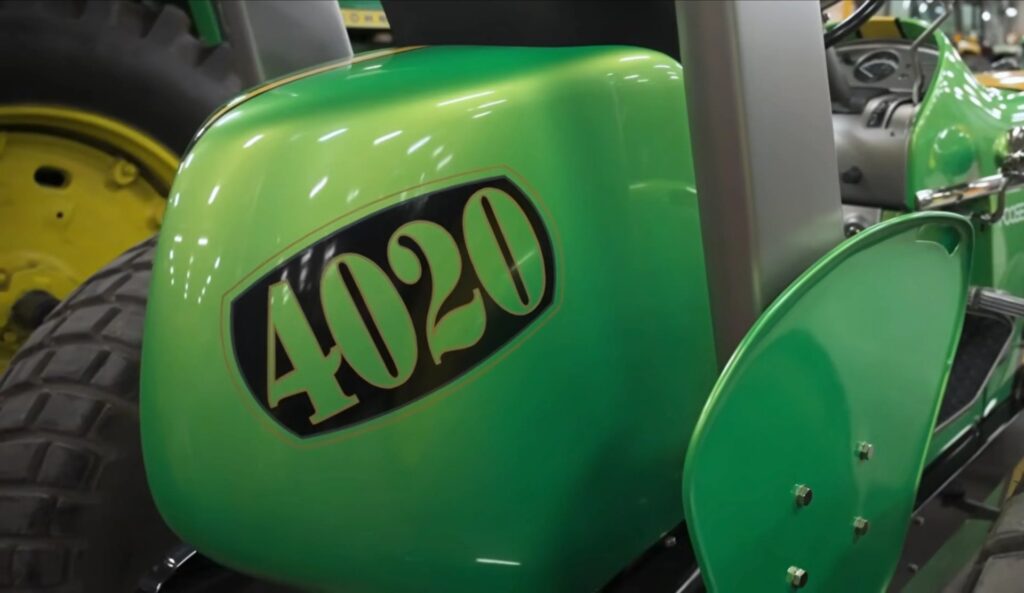
Foose stretched the 4020’s profile with an elongated, swooping hood that arcs upward just ahead of the cockpit, the same gesture you’d see on a classic sprint car from the 1960s. Fat side-exhaust pipes exit the engine bay along the flanks. Out back, a streamlined boat-tail rear end echoes the tapered tails racers wore decades ago, finished with hand-lettered “4020” decals for a vintage touch. Up front, three-ribbed hot-rod-style tires replace the standard ag rubber, paired with custom rear turf tires that keep the machine grounded in its agricultural roots.
The whole thing wears a custom metallic green paint job the team humorously called Kermit DeFrog. It’s a name that earned its stripes the moment the hood went up.
Built to Work and Built to Reverse
Here’s what most people miss about the build: it is completely functional. Every modification Foose applied sits on top of the original structural frame. The mechanical updates, the custom bodywork, the exhaust routing, all of it was engineered to be undone in a matter of days if Deere ever wanted the tractor back in stock configuration. That reversibility is what let the machine tour dealerships nationwide as a fully operable promotional vehicle before being awarded to one lucky winner.
A Polarizing Legacy
Not everyone loved it. The agricultural forums from that era still carry threads full of outraged John Deere diehards calling the build everything from a disgrace to an abomination. Heritage PR Manager Chris Boyens later pointed out the obvious: 4020s were never rare, Deere built thousands of them. That logic hasn’t quieted the purists, though, many of whom likely felt a custom-modified showpiece should still be out earning its keep on someone’s farm instead of sitting under museum lighting.
More than fifteen years after its debut, the tractor has been pulled from the public market entirely. It now lives in climate-controlled storage inside the official John Deere Archives facility in East Moline, Illinois, preserved as a piece of brand history, controversy and all. Tools can absolutely be art. Foose proved it with a wrench and a tractor.