

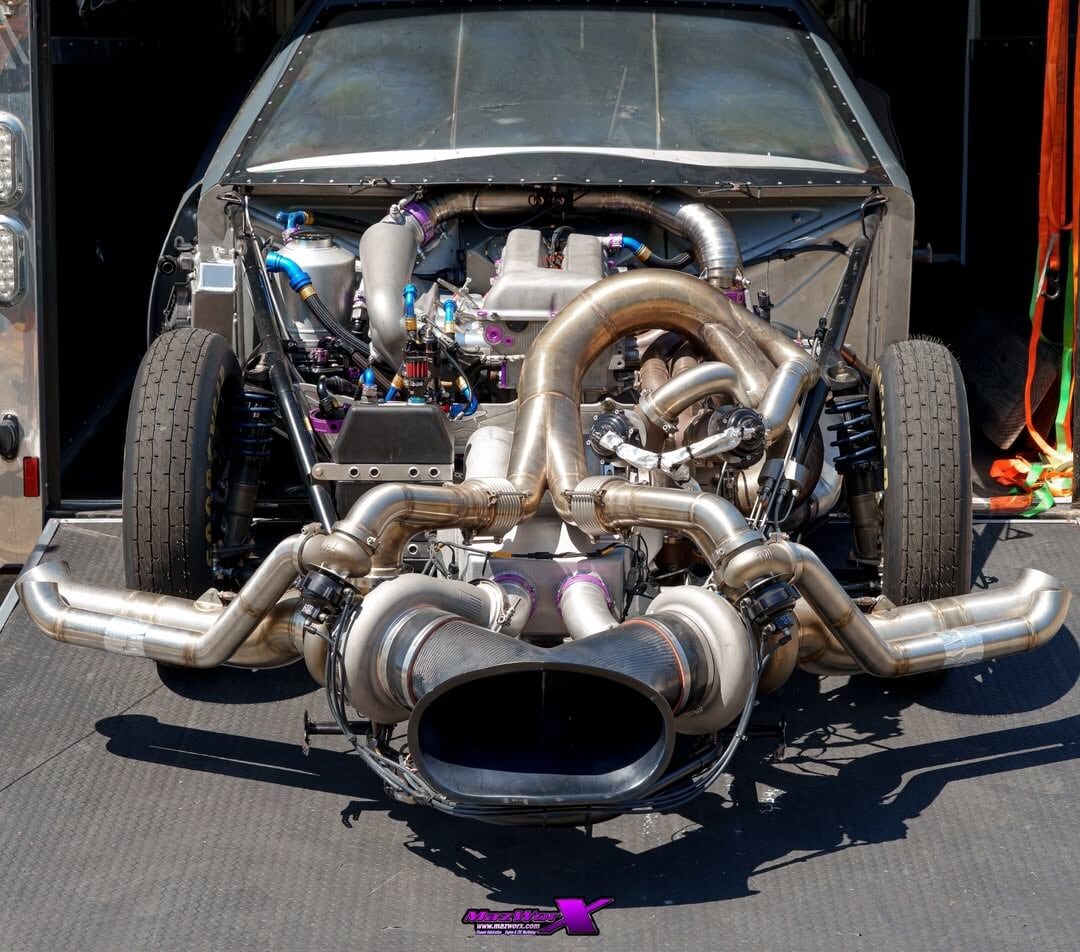
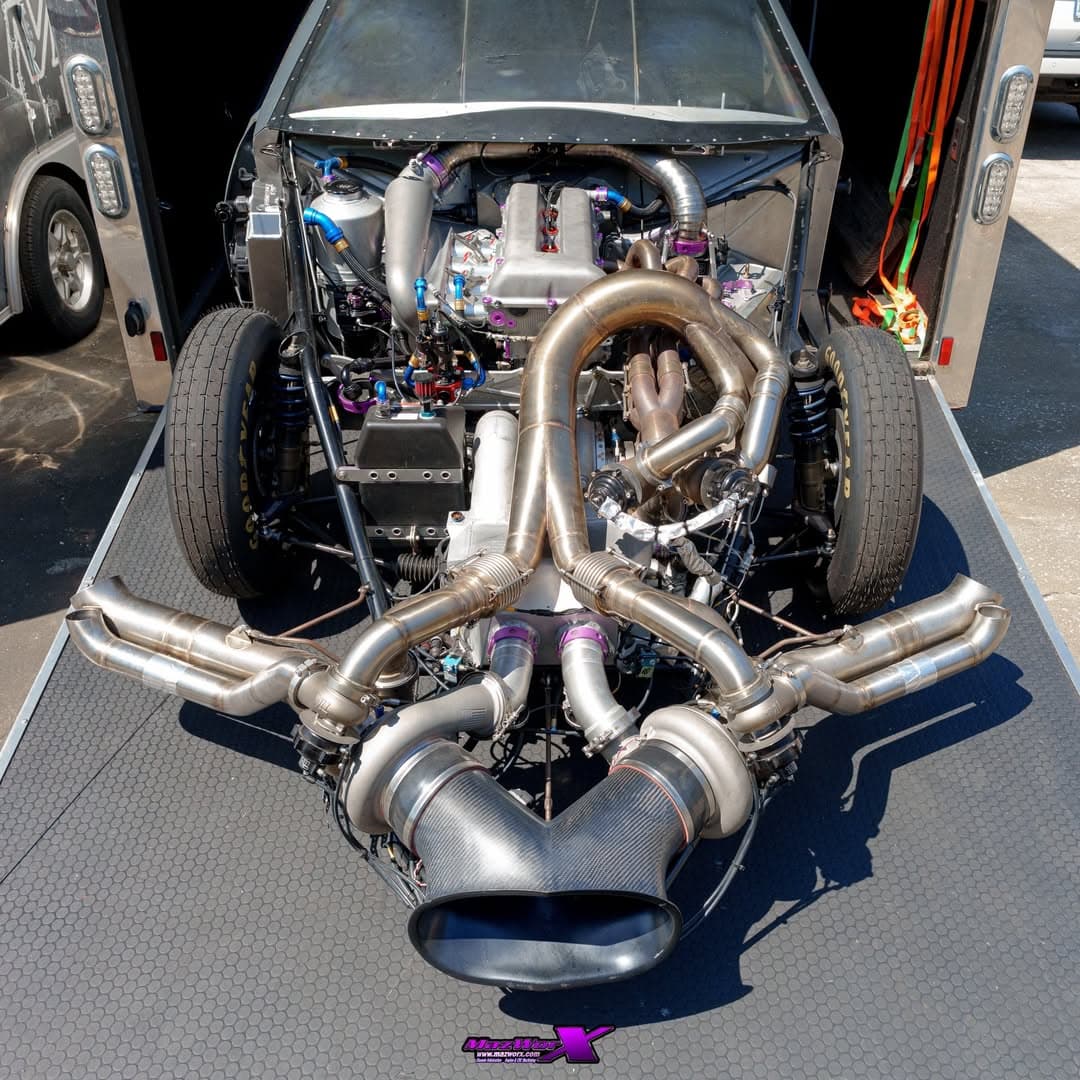
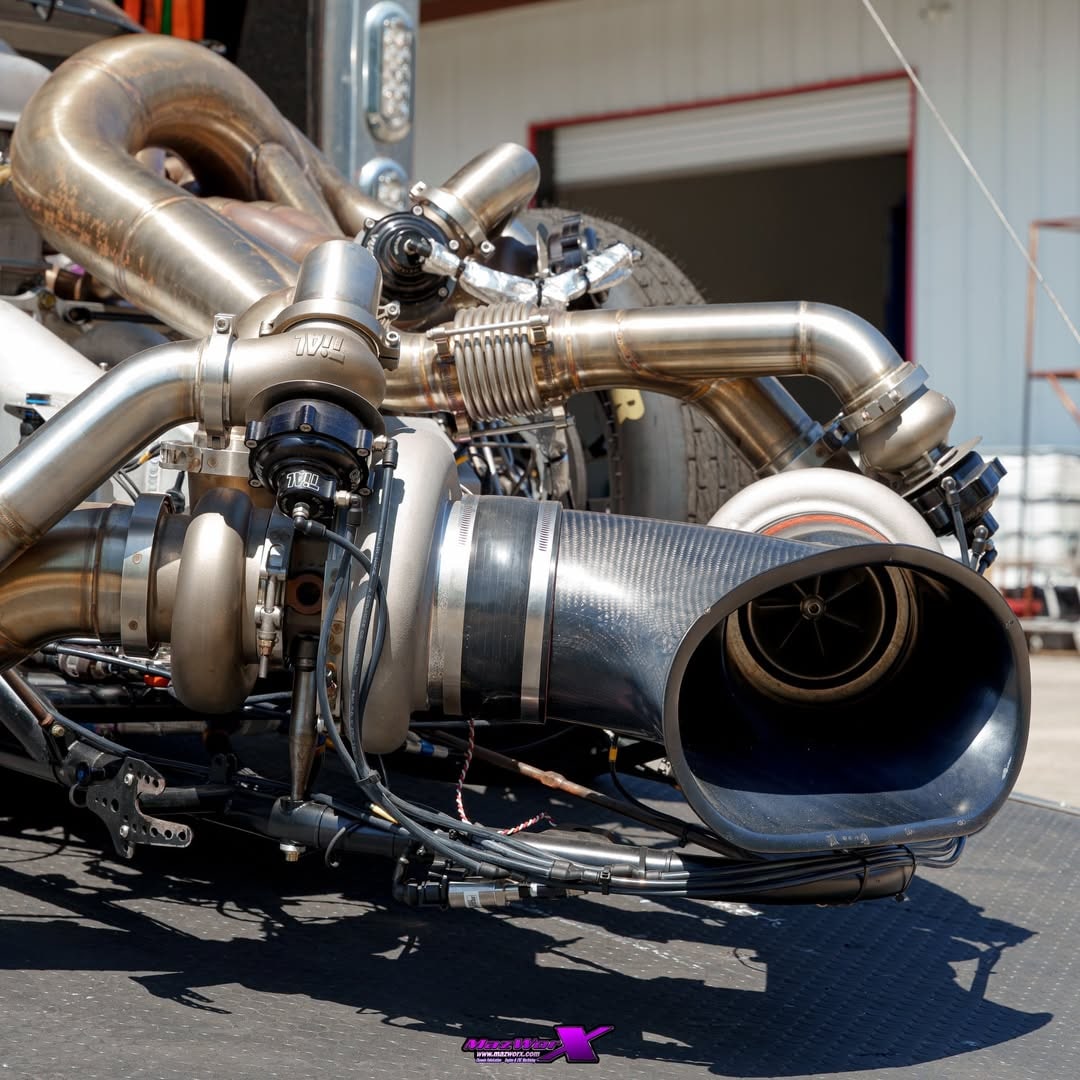
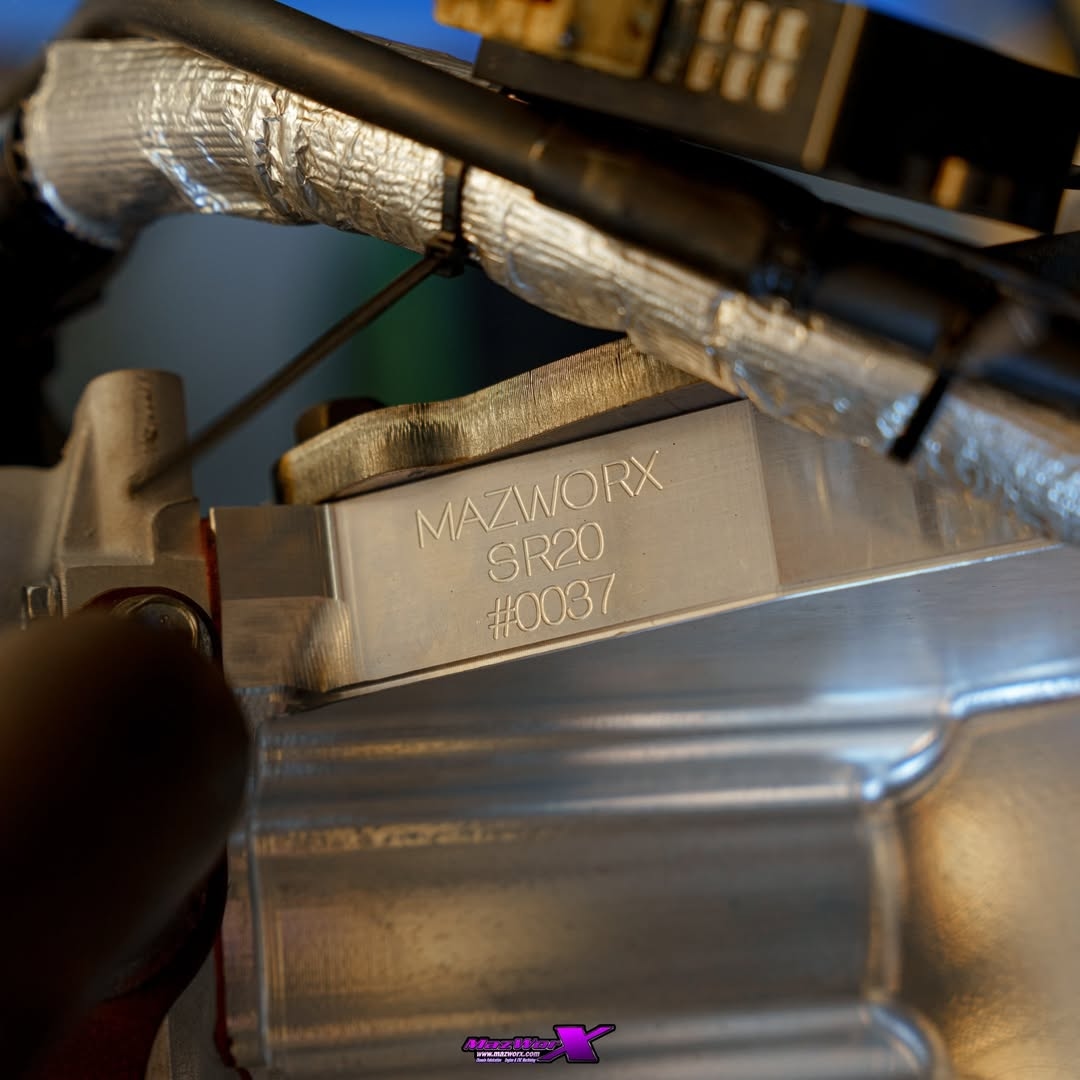
For most automotive enthusiasts, the Nissan SR20 is a 400-to-600 horsepower legend found in drift-ready Silvias. But when you step into the world of Mazworx Manufacturing, legendary takes on a whole new meaning. The image of their Celica drag car isn’t just a display of pipes and chrome; it’s a mechanical middle finger to the laws of physics. Built to redefine what a four-cylinder engine can achieve, this compound triple-turbo system has sent shockwaves through the community, promising to push the highest horsepower SR20 engine ever seen into uncharted territory.
Unveiling the Track Performance and Power Output
The question on everyone’s lips is simple: What does it actually do? The numbers are staggering. This 2.2-liter powerhouse has already clocked a mind-bending 2,300 horsepower on the dyno, making it the most powerful SR engine on the planet.
Worth A Look


But Mazworx doesn’t just build dyno queens. This specific setup is designed to hunt for world records. While their previous single-turbo S15 Silvia famously secured the four-cylinder world record with a blistering 6.22-second quarter-mile at 229 mph, this new triple-turbo Celica is the next evolutionary step. With actual horsepower numbers peaking near 2,300 hp, the goal is to stabilize these massive gains into consistent, record-shattering passes on the track.
Demystifying the Complex Triple-Turbo System
To the uninitiated, the maze of plumbing at the front of the car looks like overkill. Why three turbos instead of one massive single? The answer lies in turbo lag extreme boost setups. A single turbo large enough to flow 2,300 hp would have a powerband so narrow it would be nearly undriveable on a drag strip.
The compound triple-turbo system explained is a masterclass in series-stage compression:
- Low-Pressure Stage: Two large turbos out front (the atmospheric units) draw in massive volumes of air and compress it initially.
- High-Pressure Stage: This pre-compressed air is then fed into a third, high-pressure turbo located closer to the manifold, which crushes it further until it reaches an insane 130 psi of boost.
- Efficiency: By sharing the workload, each turbo stays within its efficiency zone, reducing heat and providing a wider, more manageable power plateau that spans from 8,900 rpm to 11,200 rpm.
The Astronomical Cost of Pushing Automotive Limits
When you see a build this radical, you aren’t just looking at parts; you’re looking at a decade of R&D. While a specific total is rarely disclosed, it’s easy to see how much money was sunk into this car build by looking at the components.
- Billet Blocks: A custom 6061-T6 aluminum billet block alone is a multi-thousand dollar investment.
- Precision Engineering: Every fitting, custom-fabricated manifold, and the triple-turbo array itself represents hundreds of man-hours of high-end labor.
- Electronics: Tuning a 2,300 hp four-cylinder requires top-tier engine management and data logging systems to ensure the engine doesn’t turn into a very expensive grenade.
Tracing the Evolution of the Record-Breaking Build
Building a world-record car is a game of constant refinement. One of the most significant SR20 engine build updates in this project has been the move toward a billet SR20 head upgrade. Historically, the stock SR20VE heads were the gold standard for reliability, but at 130+ psi, even they reach their limit.
The current focus is on a dedicated billet head that can reliably handle the heat and pressure of 200 pounds of boost. This evolution isn’t just about more power; it’s about moving the peak RPM target to a theoretical 12,000 RPM, allowing the team to manage the massive torque levels that would otherwise snap drivetrain components like toothpicks.
Ensuring Durability: Protecting the Extreme Engine from the Elements
A common concern for fans seeing those massive open turbo inlets is: What happens if it sucks in a rock? In the high-stakes world of professional drag racing, protecting turbos from debris is a calculated risk. While typical street cars use filters, the sheer volume of air required for 2,300 hp means any restriction can cost hundreds of horsepower.
On the track, the filter is often a clean environment. Teams meticulously inspect the staging lanes and track surface for FOD (Foreign Object Debris). For dyno pulls or testing in less-than-perfect conditions, temporary mesh screens or massive velocity stack filters can be used, but for a maximum-effort world-record attempt, those turbos are often left open to breathe every ounce of oxygen they can get.
The Mazworx Triple-Turbo Celica is more than just a car; it is a rolling laboratory for the limits of internal combustion. By combining amazing fabrication work with cutting-edge compound turbo theory, Mazworx has transformed the humble SR20 into a titan that rivals the output of 4,000 hp V8s on a per-cylinder






Sign In To Your carskingdom1 Account
0 Comments
Newest
Oldest