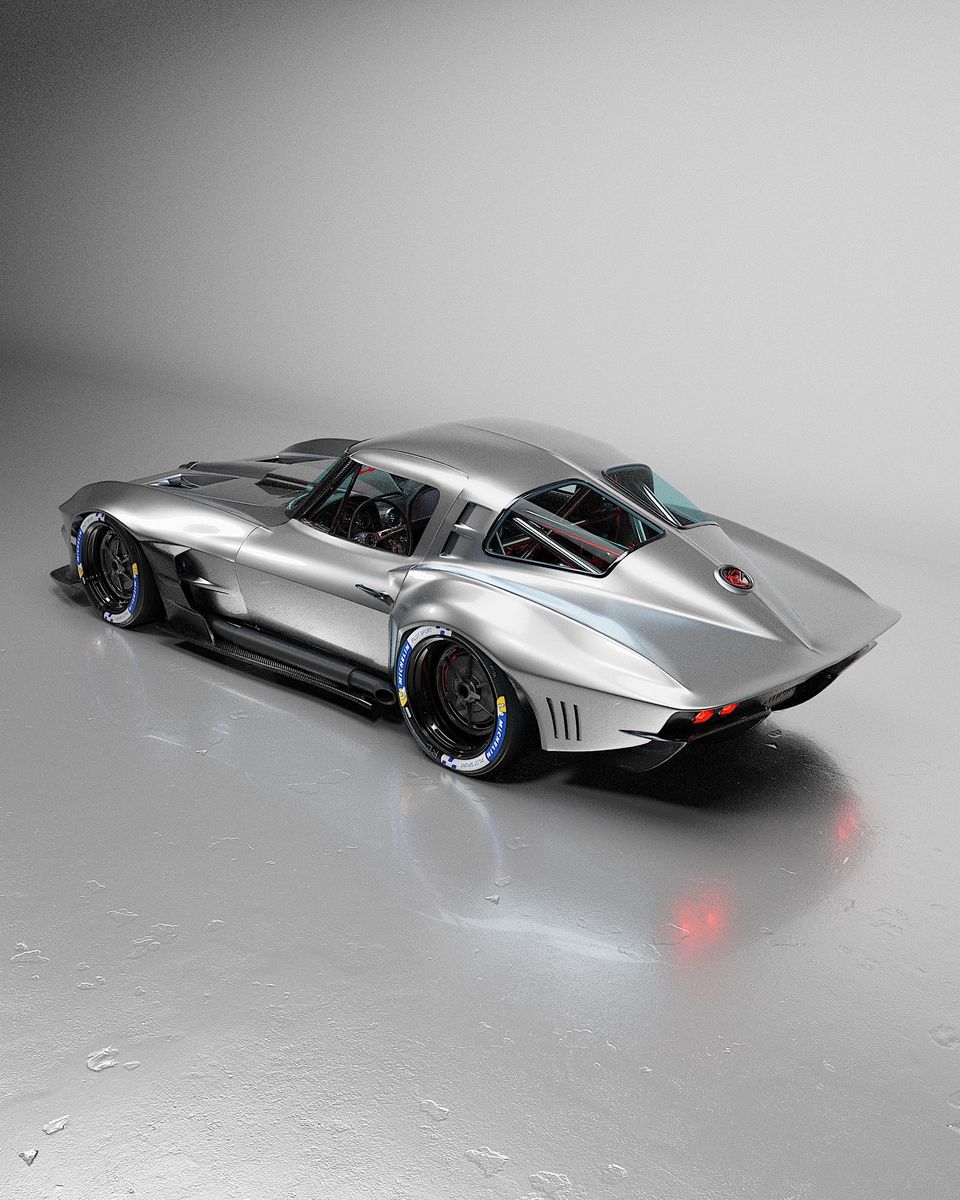
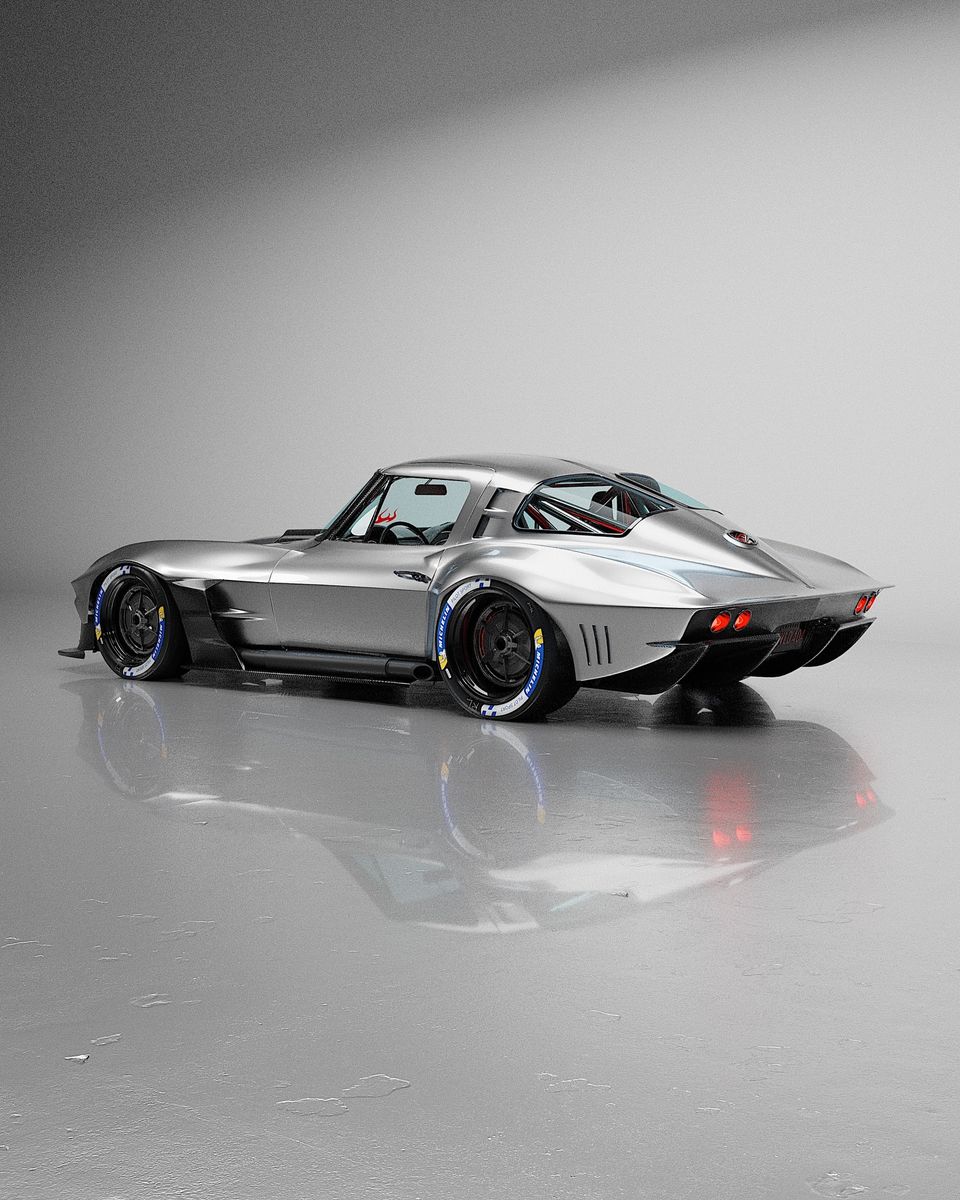
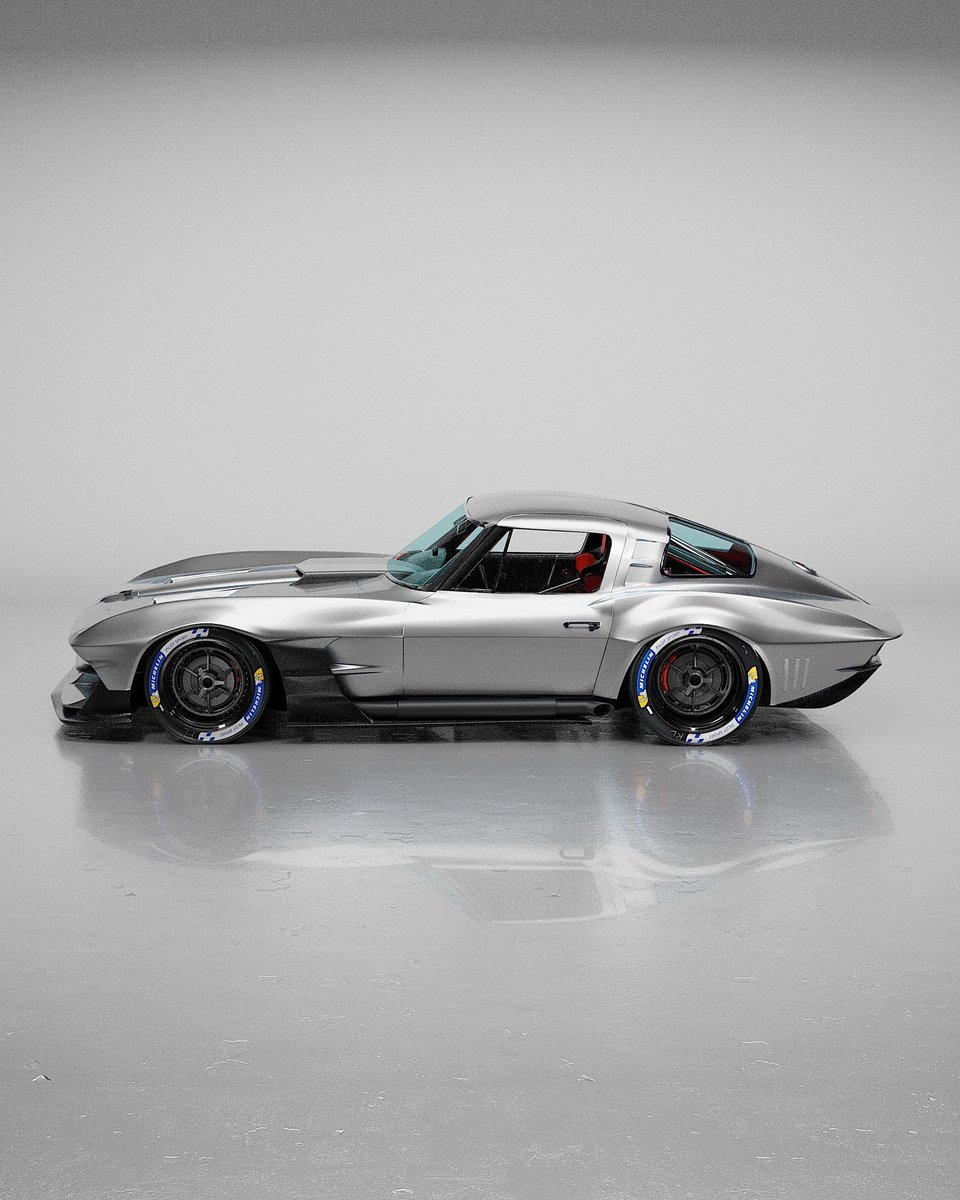
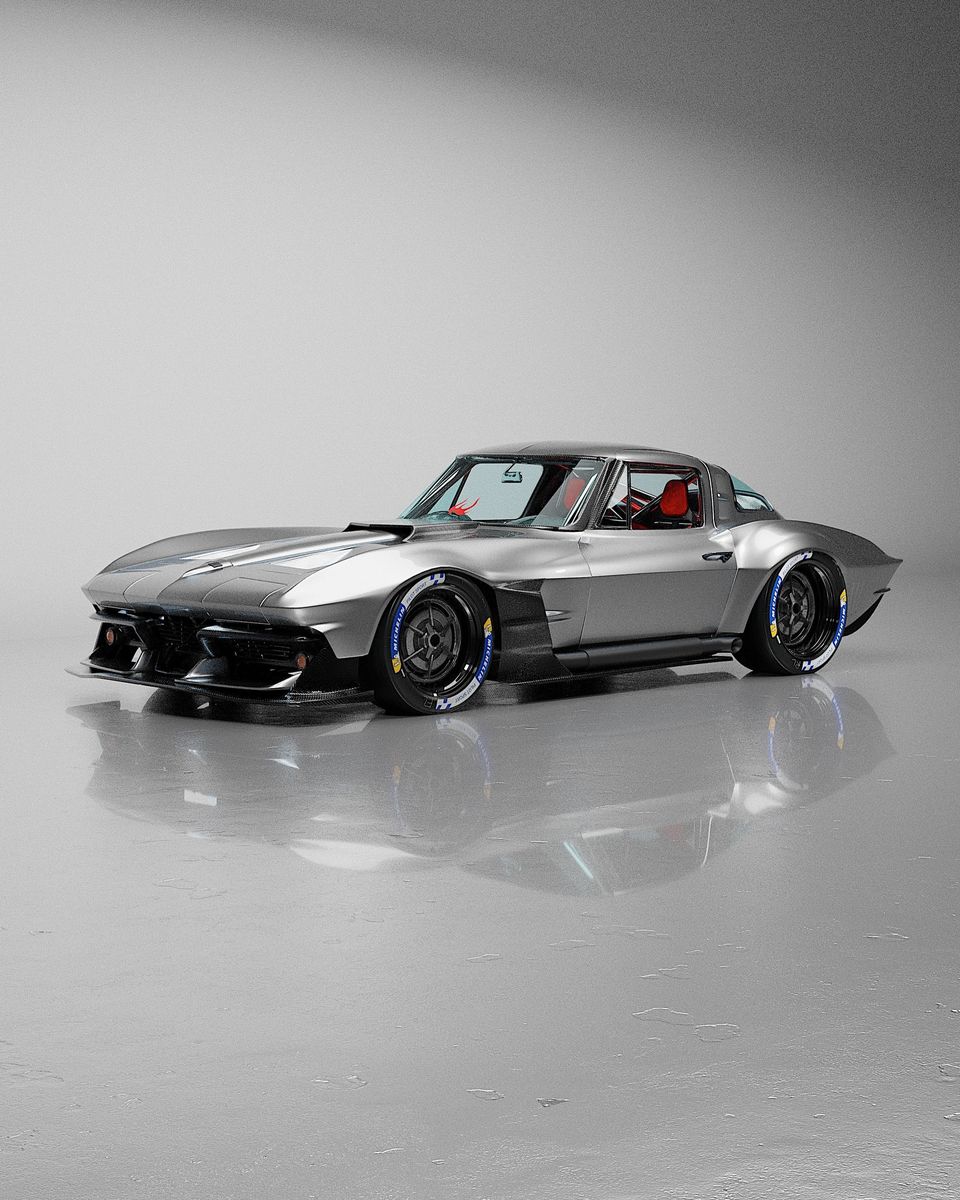
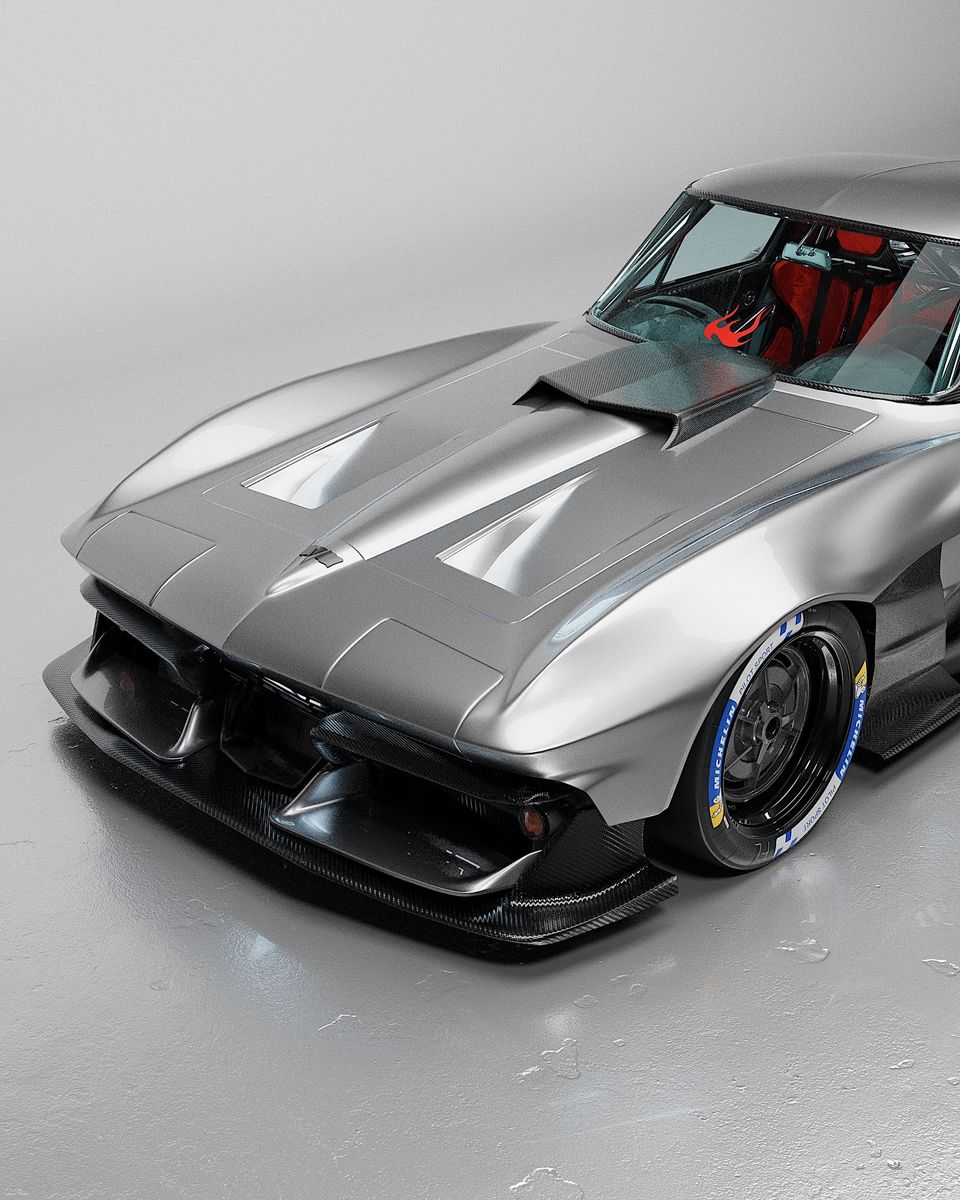
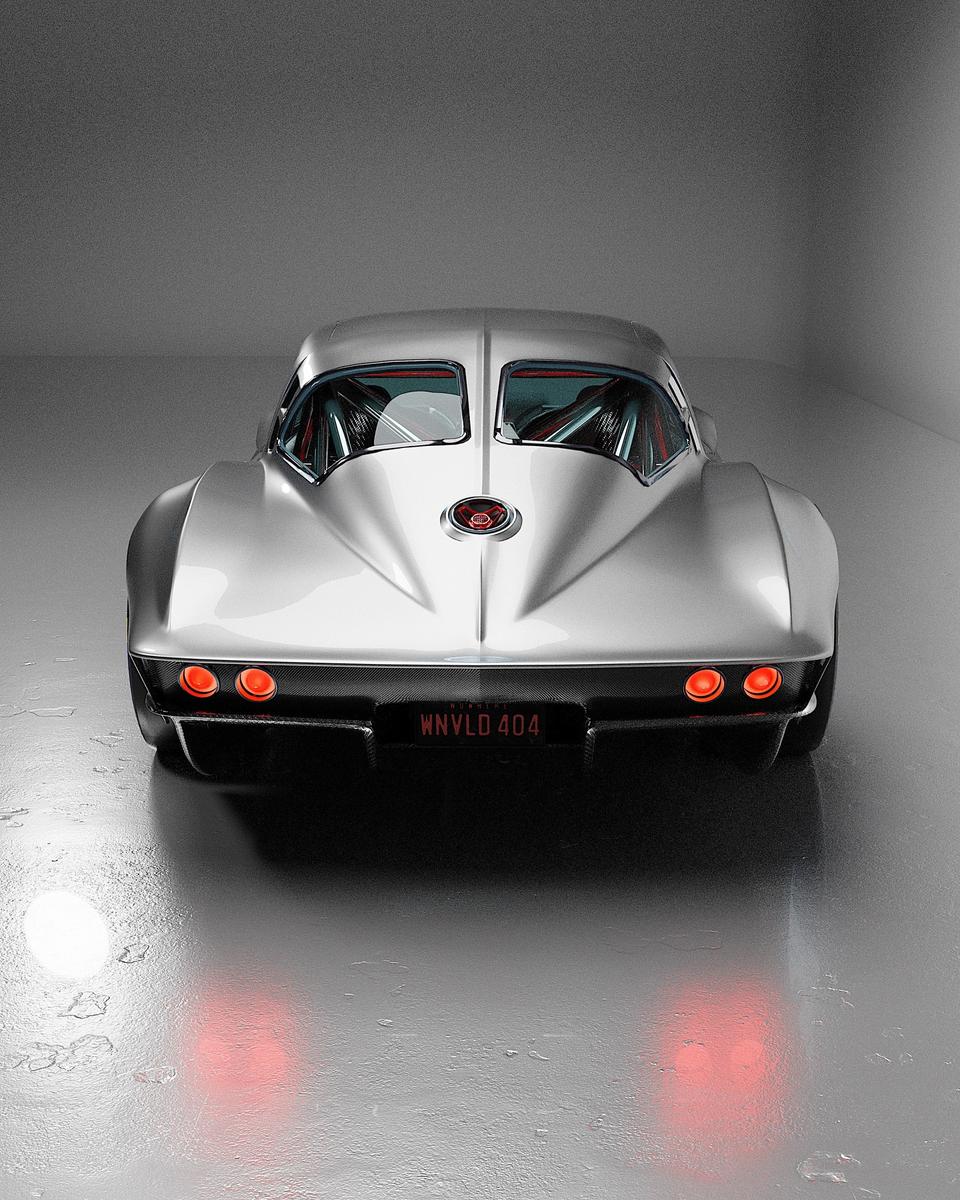
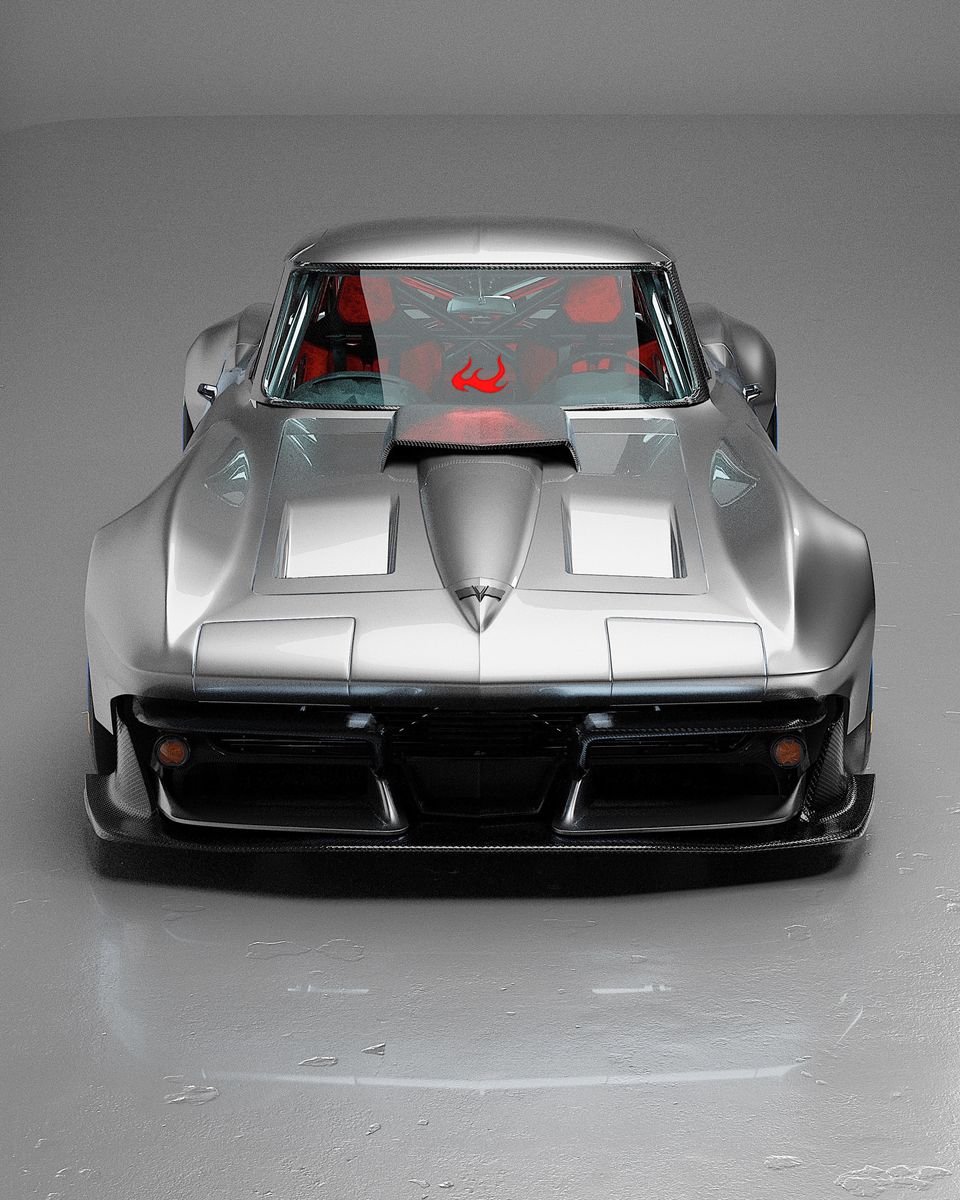
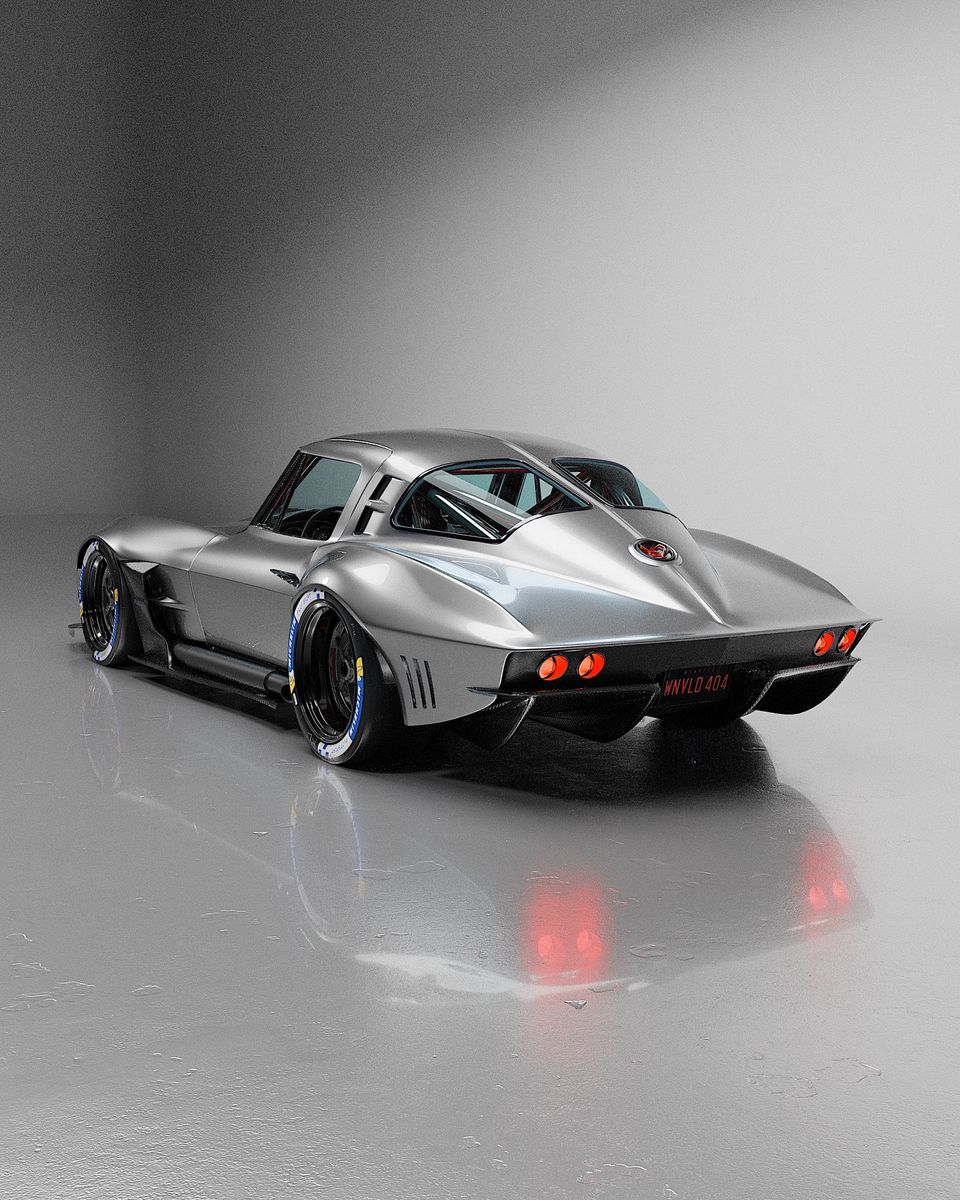
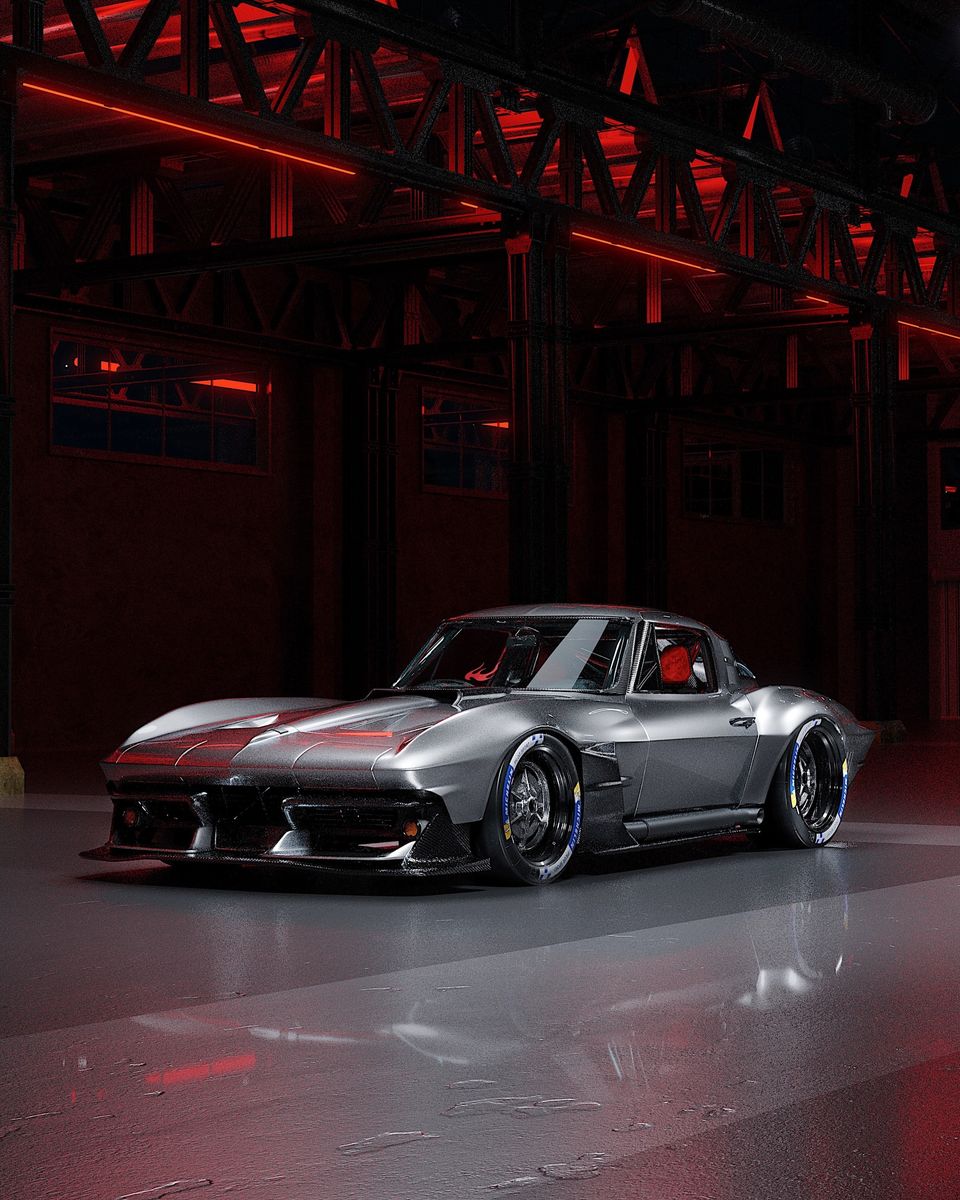
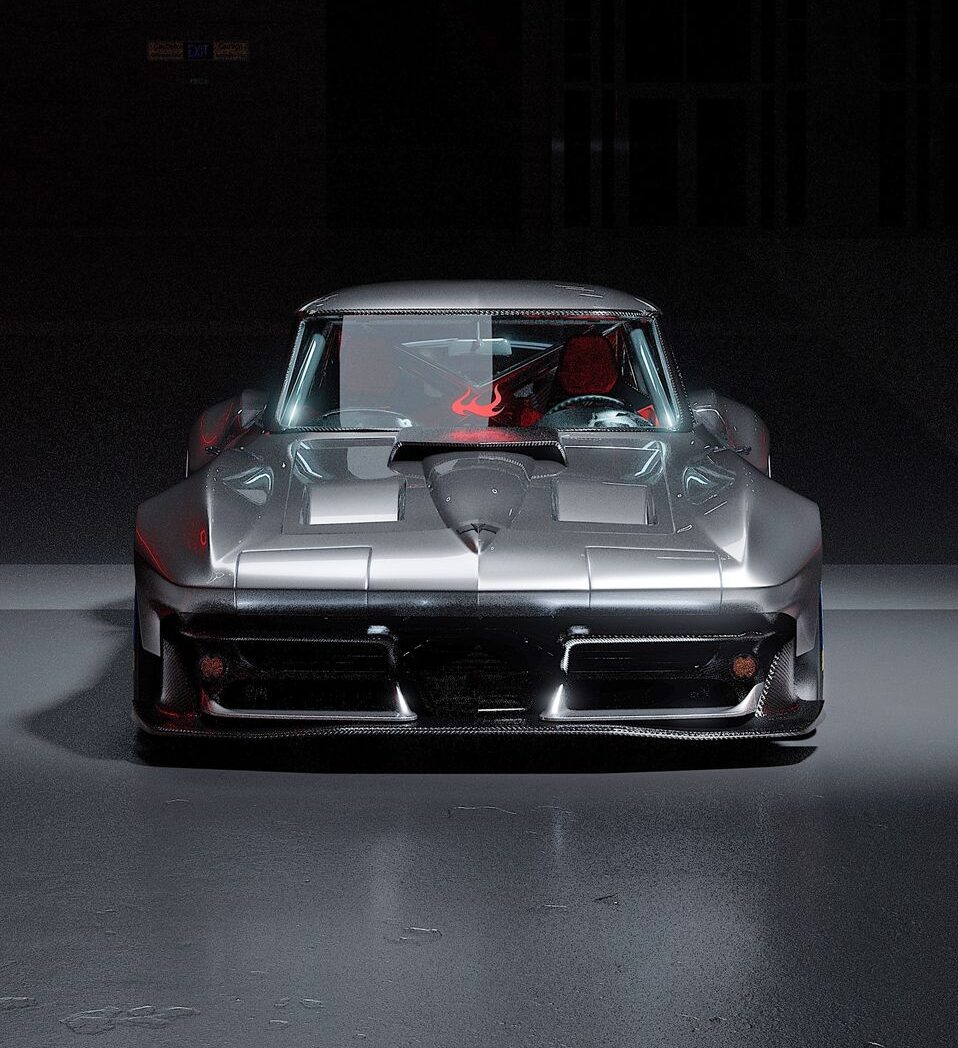
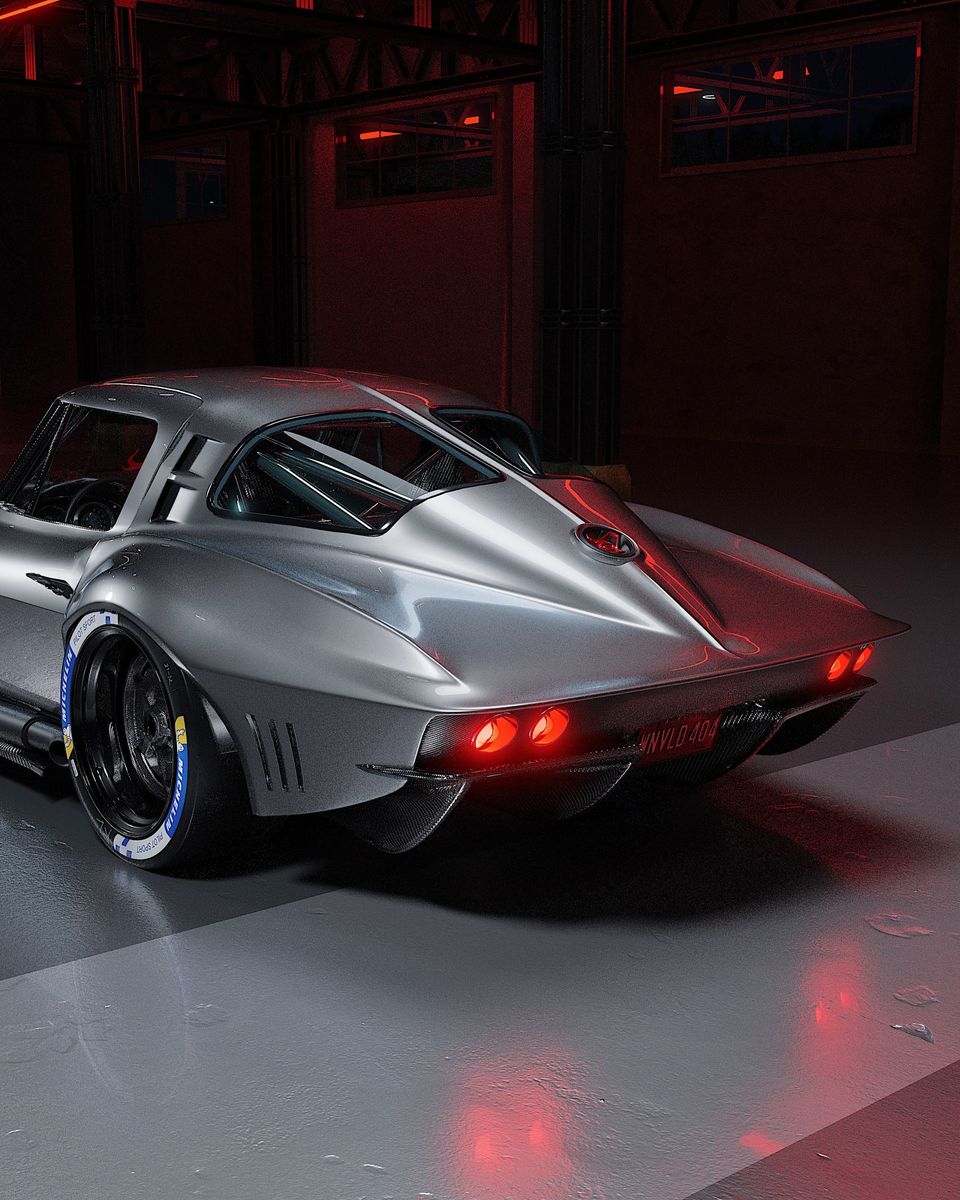
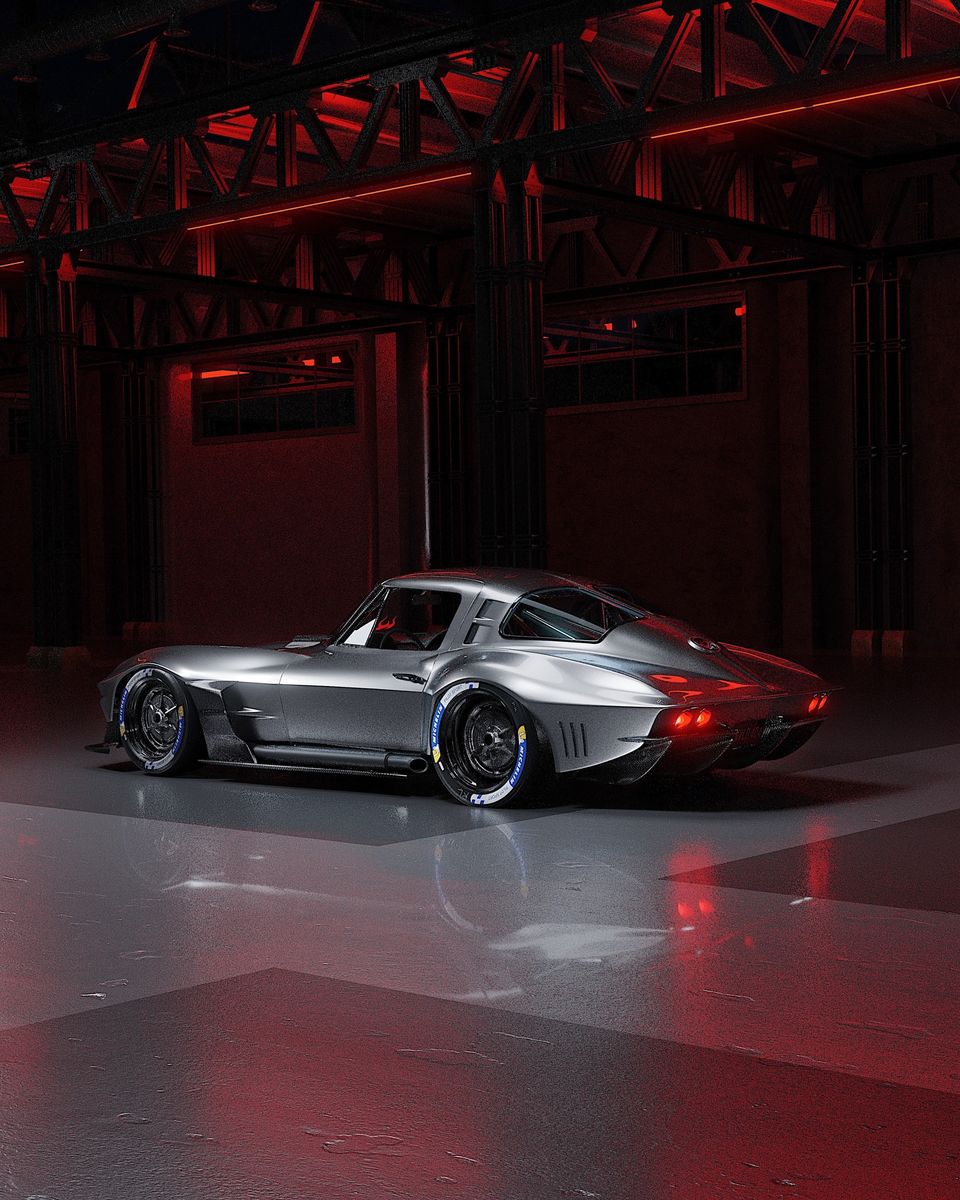
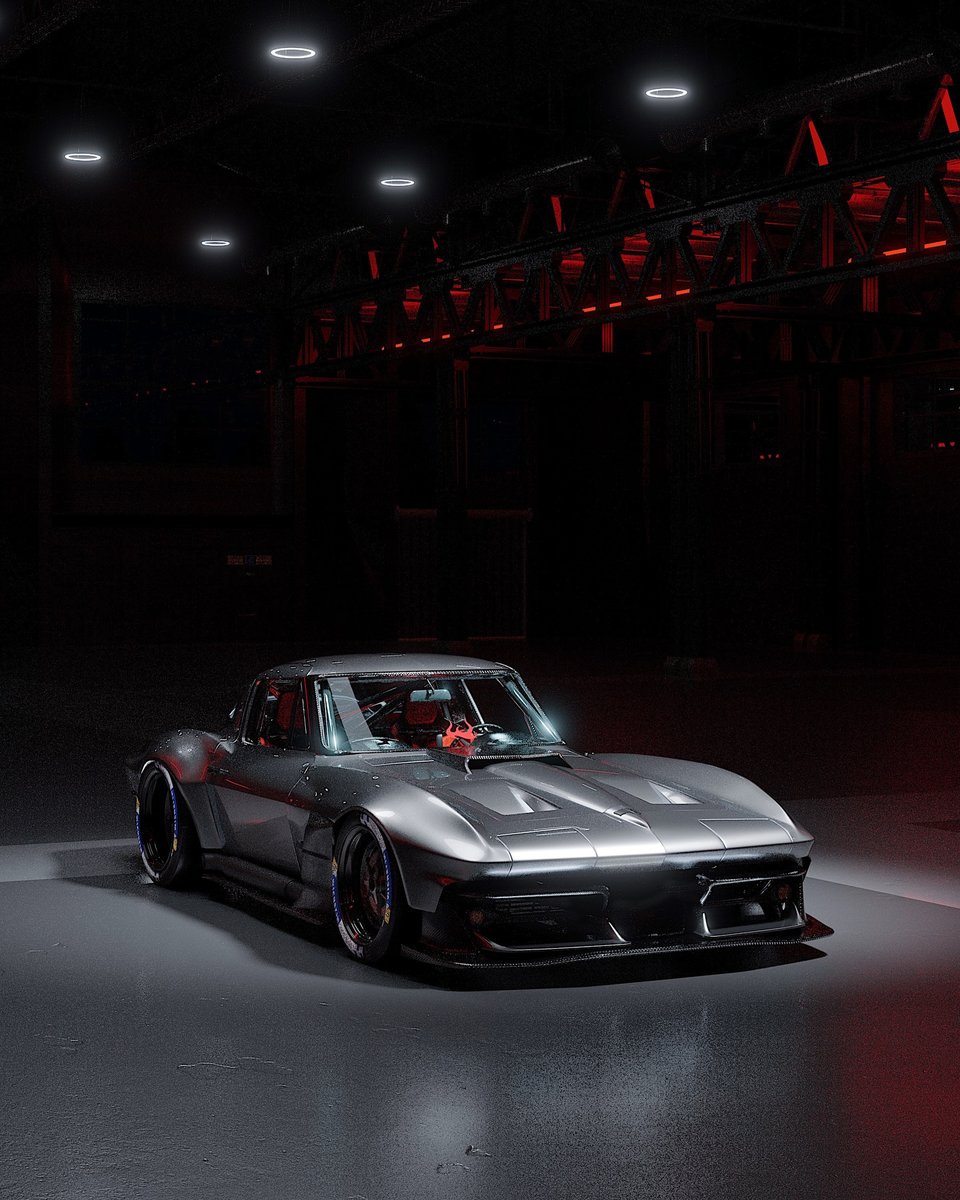
- 1963 Chevrolet Corvette Sting Ray C2 reimagined as a race-inspired widebody concept by digital artist Andreas Wennevold, blending American muscle heritage with modern supercar aerodynamics.
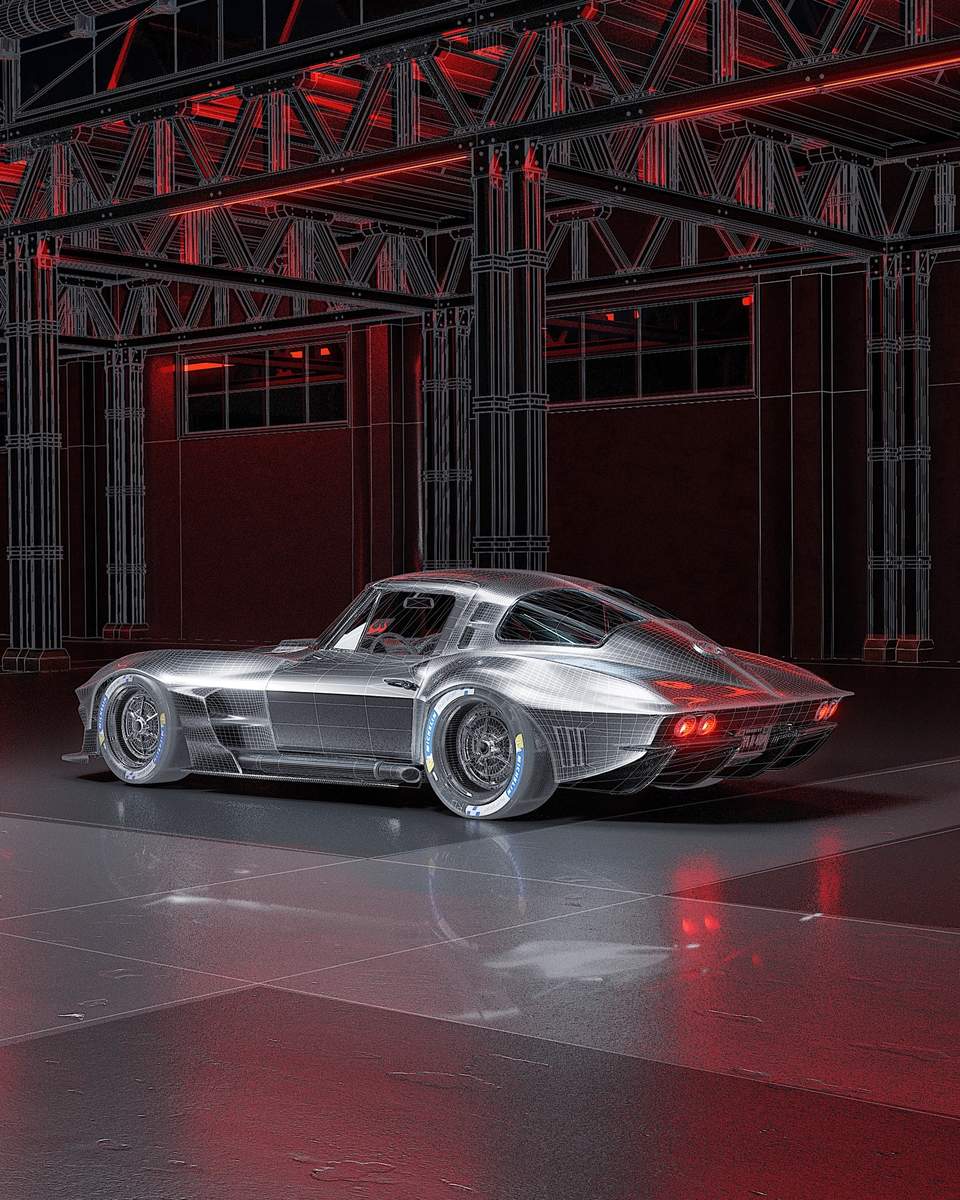
- Fully digital 3D render created in Blender, featuring a stripped race interior, carbon fiber ground effects, and custom aero-disc turbofan wheels for a futuristic track aesthetic.
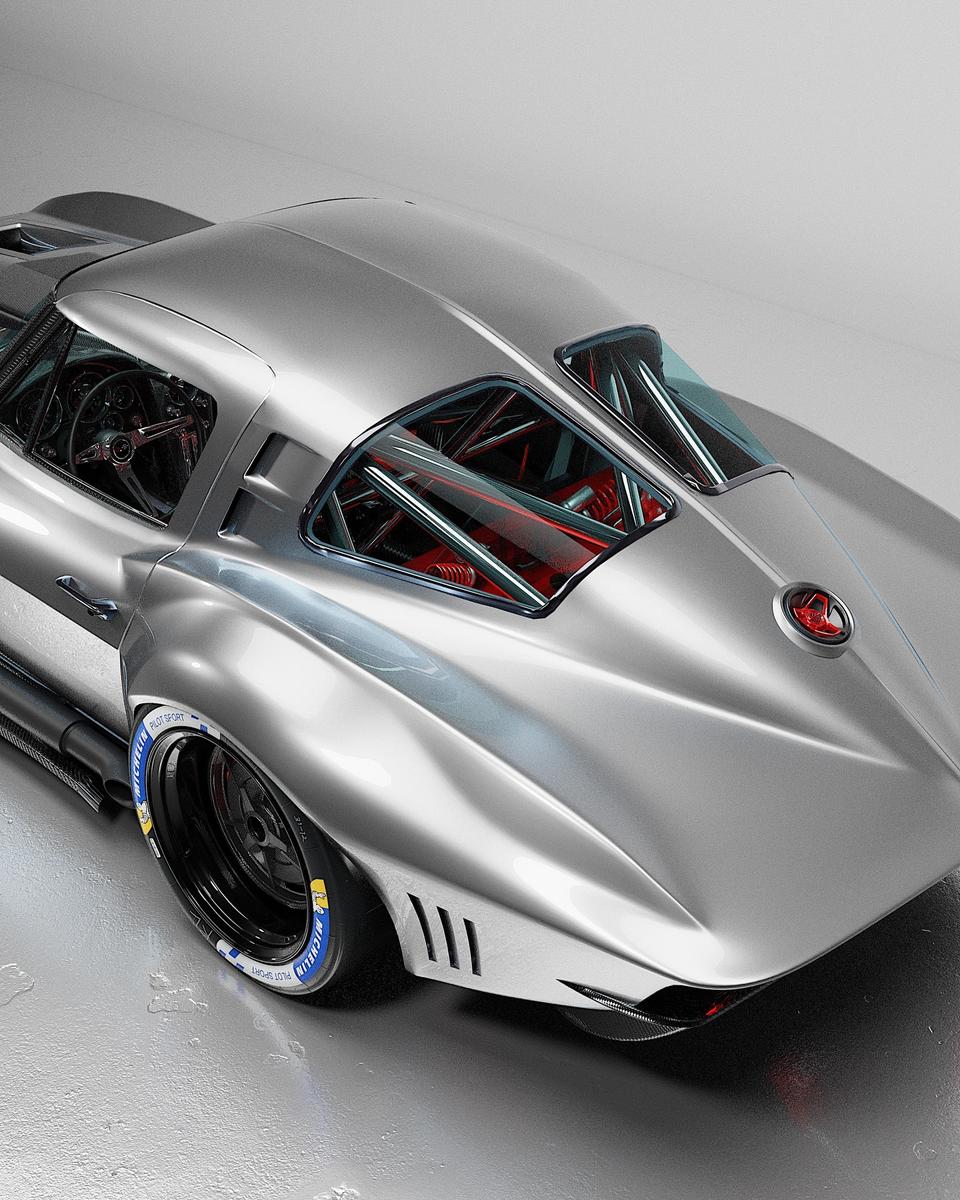
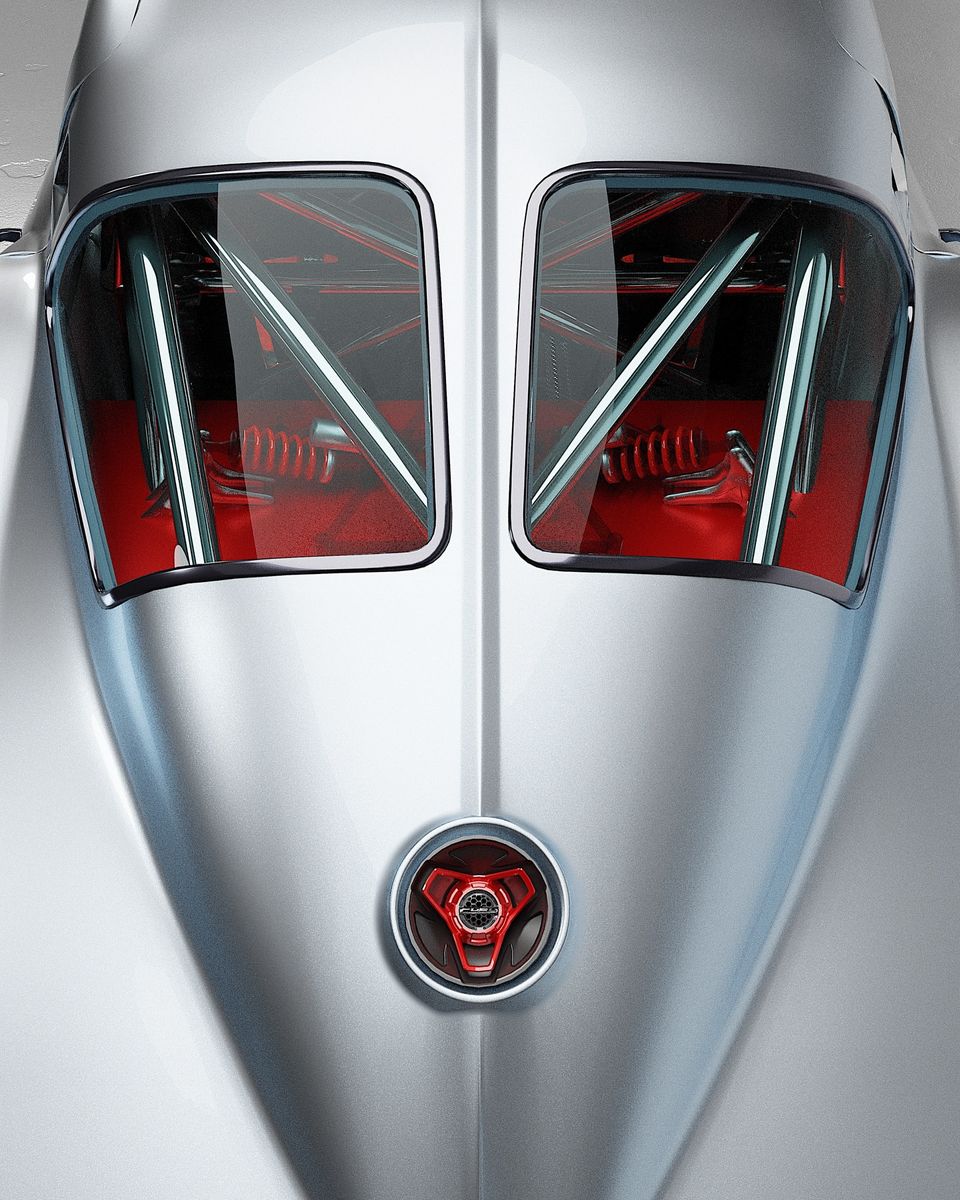
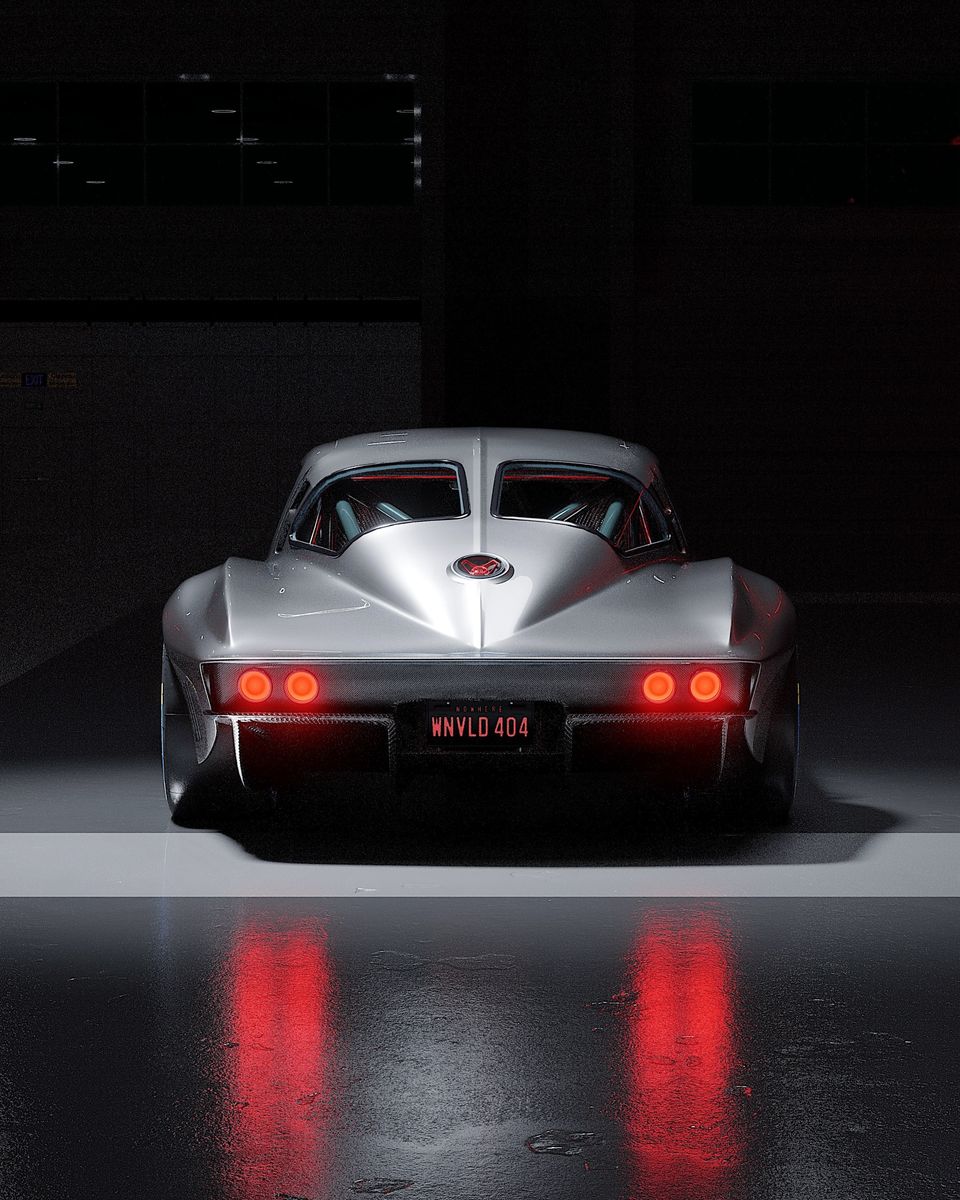
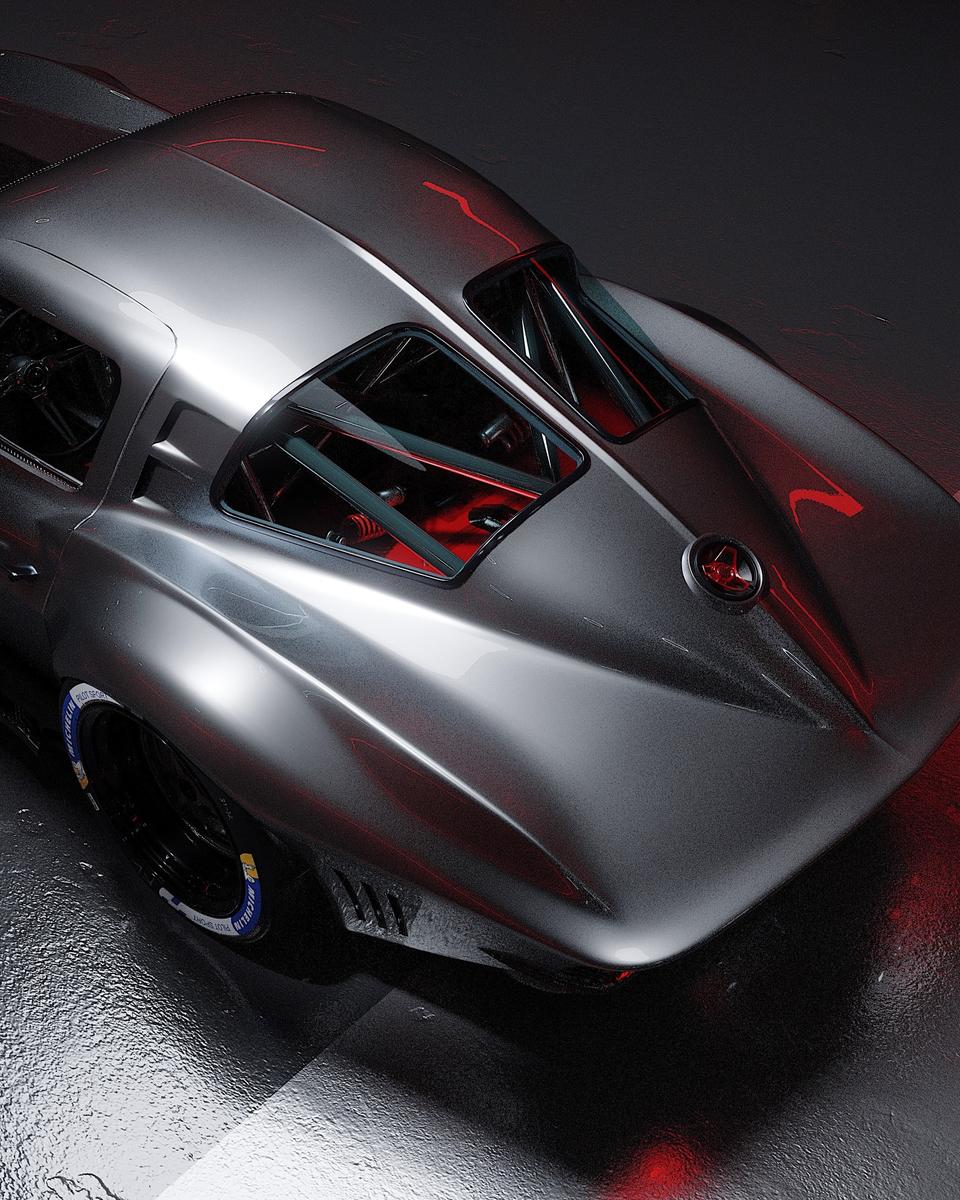
- Celebrates the iconic ‘One-Year-Only’ Split Window design, preserving the controversial 1963 rear spine while aggressively updating the silhouette for a hypothetical modern performance landscape.
The Saint of the Strip Goes Cyberpunk
In the hallowed halls of automotive history, few silhouettes command as much reverence—and protectionism—as the 1963 Chevrolet Corvette Sting Ray. It is the Holy Grail of American fiberglass, a design so distinct with its dorsal spine split-window that General Motors killed the feature after just one year due to visibility complaints, inadvertently creating a blue-chip collectible. To modify one in the real world is often considered heresy, a sin against the church of Zora Arkus-Duntov. But in the boundless digital ether, artist Andreas Wennevold (@wnvld) has committed a masterstroke of sacrilege, transforming the delicate classic into a wide-shouldered, tarmac-scraping track monster that feels less like a museum piece and more like a time-traveling GT racer.
Anatomy of a Digital Restomod
Wennevold’s vision, rendered with photo-realistic precision in Blender 3D, serves as a modern reinterpretation that creates a bridge between the analog 1960s and contemporary supercar aesthetics. This is not a physical production car, but a “What If?” scenario that explores the vintage-modern form language currently dominating high-end custom culture.
Worth A Look




The concept retains the C2’s most critical DNA—the pop-up headlights and that legendary split rear window—but radically alters the proportions. The body has been widened significantly, draped over a chassis that sits inches from the ground. Wennevold has replaced the delicate chrome bumpers with aggressive carbon fiber splitters and diffusers, functionally updating the aerodynamics while paying homage to the original bumper placement. The side profile is dominated by aero disc-style custom wheels, a nod to Group 5 racers and modern turbulence-reducing designs, wrapped in ultra-low-profile racing rubber.
Inside the Machine
While the exterior screams grand tourer, the interior modifications suggest a singular purpose: lap times. The digital cockpit has been stripped of its mid-century luxuries, fitted instead with a race-focused setup including a full roll cage and bucket seats. It is a stark contrast to the original’s grand touring intent, reimagining the Sting Ray not as a cruiser, but as a raw, stripped-down precision instrument. This juxtaposition of the 1963 model’s beautiful, fluid lines with the brutal functionality of modern motorsport engineering creates a tension that makes the image impossible to ignore.
The Legacy of the Split
This render lands at a moment when the appetite for “cyber-restomods” is at an all-time high. By choosing the 1963 Split Window as his canvas, Wennevold taps into a deep vein of automotive nostalgia. The original design was a battleground between design chief Bill Mitchell, who loved the spine, and engineer Zora Arkus-Duntov, who hated the blind spot. Wennevold’s update vindicates Mitchell’s vision, proving that the split window isn’t just a quirk of history—it’s a timeless structural element that can anchor even the most futuristic redesign.
.
View this post on Instagram